
Dr. C.T. Dow has published a perspective article describing the association of MAP and colorectal cancer. The Open Access article appears in the June issue of the journal Pathogens.
ABASTRACT
The rising incidence of early-onset colorectal cancer (CRC) remains incompletely explained despite extensive investigation into genetic, environmental and metabolic factors. Emerging evidence suggests that infectious agents may contribute to colorectal carcinogenesis. A recent study by Tehrani et al. demonstrated the presence of Mycobacterium avium subspecies paratuberculosis (MAP) in a majority of colorectal cancer lesions and in approximately half of precancerous lesions, providing a critical epidemiologic anchor. MAP, a zoonotic intracellular pathogen long associated with Crohn’s disease, exhibits biological features consistent with inflammation-driven carcinogenesis, including persistence, immune modulation and systemic dissemination. Mechanistically, MAP infection may promote tumorigenesis through chronic mucosal inflammation, epithelial barrier disruption and activation of human endogenous retroviruses (HERVs) linking persistent infection to genomic instability. Detection of MAP in early lesions argues against secondary colonization and supports a potential initiating or promoting role. Within a One Health framework, MAP represents a plausible, pleiotropic and potentially modifiable contributor to CRC. While causality remains unproven, the convergence of epidemiologic association, mechanistic plausibility and early lesion involvement warrants rigorous investigation.
COMMENTS
MAP is prevalent in many food producing animals. It is found in foods, such as meat, milk, and cheese, derived from those animals, even after processing. It is also found in domestic water supplies. It is not surprising that it is also found in humans in association with diseases such as Crohn’s disease and colorectal cancer.
This article nicely outlines the challenges of proving the causal relationship between MAP and colorectal cancer and offers a path forward to discovering if MAP is, in fact, a cause of colorectal cancer. It is an important contribution to understanding the zoonotic potential of MAP. The article is quite technical, but the overall assessment of MAP and colorectal cancer is easily understood.
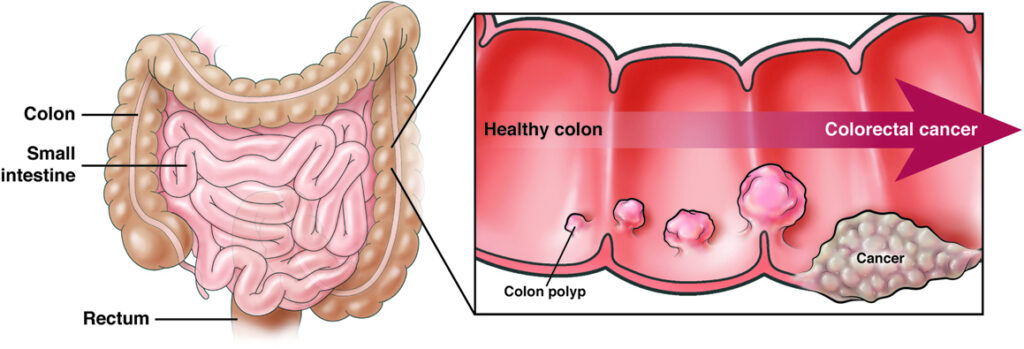
Colorectal cancer is the third most common cancer and the second leading cause of cancer death in the United States. Approximately 158,850 new cases are diagnosed annually, resulting in 55,230 deaths. While overall incidence rates have dropped in older adults due to screening, cases in individuals under 50 are surging by nearly 3% each year.
Colorectal Cancer Resources:
Image credit: American Gastroenterological Association